Good Saturday, everybody. Rounds of showers and storms are targeting the region this weekend, bringing the potential for a few severe storms and heavy rains. With some of the storm clusters moving over the same areas in repeat fashion, we are on guard for some flash flooding issues.
The setup continues to feature a stalled front right on top of the region with low pressure to our west. Rounds of storms are developing along the boundary and riding toward the southeast into Kentucky. Each of these storm clusters can feature strong to severe storms and put down torrential rains. Some folks across the state can see better than 3″ of rain through the weekend. I don’t think those numbers are widespread, but they may show up in streaks as the storms work through. This would be enough to cause flash flooding concerns.
As mentioned, the threat is there for a few severe storms. Damaging wind looks to be the primary player for any severe storms out there today.
Here’s the current Severe Weather Outlook from the Storm Prediction Center…

That threat continues into Sunday and expands to cover most of the region in the low-end risk…

Not everyone sees a ton of rain over the weekend with the best chance being across the west and central parts of the state. You will get dry times out there.
The pattern then keeps throwing showers and storms our way as we head into early next week and that should extend through the rest of the week. Obviously, it’s not raining every day where you live, but we will be tracking storms each day. All of this will keep our temps in check as our tame temp summer rolls on.
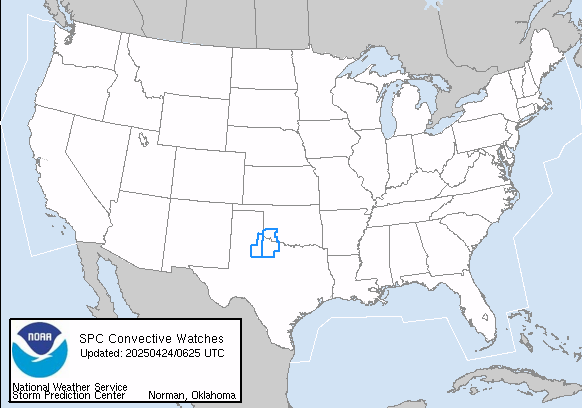
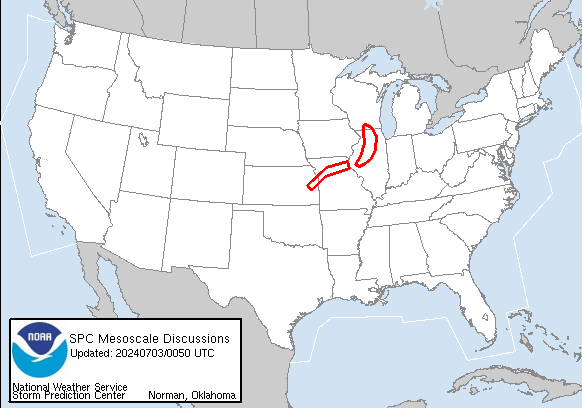
I leave you with your storm tracking tools for the day…

Current watches
Possible Watch Areas
Make it a great day and take care.

It looks like it will be a keep your eyeballs on the radar type of week.
Death Valley in California is supposed to hit 130° or higher this weekend. At least we’re not that bad off.
Good Lord, I would think that would be an all time record ? I read that the month of June was 4 degrees above normal over the entire country with the warmest over the Western states. California and Nevada being the warmest. I would think that water would have to be truck into those areas most affected as the Snows in the mountains this past Winter were below normal.
You can easily search for information on record high temperatures in Death Valley and other locations on Google.
The world record for the highest recorded temperature was 134 degrees on July 10th, 1913, at Greenland Ranch in Death Valley, according to Guinness World Records.
Last August 16th, Death Valley hit 130 degrees.
http://weather.gov/vef/DeathValley130
The forecast for rains in my area of central Kentucky went from 90% to 60% for today. The line of showers and thunderstorms to my west are beginning to show signs of weakening. Maybe tomorrow as the cold front moves through and stalls out. I think we will end up with at least an inch of rain in my backyard when all is said and done ?
On another note NOAA is forecasting a La Nina Watch for this coming Winter. A “double dip.” Not unusual for this to occur. Did not say what strength it will be. My two cents says it will be a weak to moderate La Nina.
Anyone want a free Snow shovel ? LOL
Interesting Mike, I’m now wondering as this occurrence with higher than normal temperatures is happening more often. For instance the tremendous heat wave in the Pacific Northwest a week or two ago. It may be explained with the PDO being in the negative phase for such a long time. Cooler surface sea temperatures in the western part of the Pacific and cooler than normal in the eastern part of the Pacific Ocean causes ENSO to go neutral phase to La Nina in the Winter. I will post the article below on the Pacific Decadal Oscillation. Interesting read.
Correction: Warmer than normal surface sea temperatures in the western Pacific Ocean.
https://en.wikipedia.org/wiki/Pacific_decadal_oscillation
In the article above it states that in 1976-77 the PDO went to the warm phase (+) unlike now it’s the opposite in the cool phase (-). The warm phase is the time period of the very frigid and Snowy Winters with two weak El Nino’s occurring from 1976 through 1978. Two weak El Nino’s in two consecutive is uncommon.
Correction: two consecutive years is uncommon. I’m done now. I hope everyone finds this article interesting.